You’ve likely seen the heavy black device clipped to an officer’s uniform countless times. While it might resemble the simple walkie-talkies used on camping trips, what type of radio do police use in reality? This equipment is actually a sophisticated “lifeline” designed to function when every other form of communication fails.
Unlike a smartphone that often drops calls during crowded events, professional two-way radios connect instantly to a dedicated, resilient network. Industry standards require these devices to prioritize absolute reliability, ensuring a call for help cuts through the noise even in the worst conditions.
Gone are the days of static-filled analog chatter. Modern police radios utilize digital technology to turn voice into clear computer code, securing the signal against eavesdropping while keeping officers connected across entire cities.
Inside the “Brick”: Why Motorola APX and Harris Radios are Built for Chaos
If you drop your smartphone on the sidewalk, you likely panic. For a police officer, dropping their communication device is routine. Major manufacturers design units like the Motorola APX series to be “ruggedized,” meaning they are engineered to survive extreme heat, water submersion, and the physical impact of a takedown. This heavy-duty construction ensures that the officer’s lifeline to dispatch remains open even when the physical environment turns chaotic.

The most critical feature on these devices is the distinct orange button usually found on top. This isn’t just a power switch; it is a priority panic alarm. Pressing it triggers an emergency alert that overrides all other traffic on the network, instantly opening a clear channel for the officer to call for help. It acts as a digital siren, guaranteeing that an officer in distress is heard immediately above the routine chatter.
While the battery-powered “portable” on the officer’s belt is essential for mobility, it lacks the raw power of the “mobile” unit mounted inside the patrol car. The car radio draws electricity directly from the vehicle to broadcast with significantly higher wattage. This extra power helps punch signals through dense urban buildings or across rural distances where a handheld device might struggle to find a connection.
Yet, having indestructible hardware and high-powered transmitters is useless if the radios cannot understand one another during a multi-agency crisis. Just as different phone brands need compatible networks to text, police radios require a shared standard to communicate across department lines. That is where a universal digital language known as P25 steps in to connect everyone.
P25: The “Universal Language” That Lets Different Departments Talk
In the past, a police officer from one city often couldn’t radio a deputy from the next county because their radios spoke different technical dialects. To solve this dangerous communication gap, public safety agencies adopted a digital standard called APCO Project 25 (P25). This set of rules functions like a universal translator, ensuring that a Motorola radio used by the fire department can communicate perfectly with a Harris radio used by the police during a massive, multi-agency emergency.
While P25 is the gold standard for first responders, you might see security guards or hotel staff using a different digital system called DMR (Digital Mobile Radio). Although DMR handles business logistics well, it lacks the critical fail-safes required when lives are at stake. The differences are stark:
- Background Noise: P25 actively filters out loud sirens and wind to isolate the human voice; DMR often struggles in high-noise environments.
- Roaming Reliability: P25 radios seamlessly switch between towers without dropping audio, while DMR is often limited to a single site.
- Strict Compatibility: P25 enforces strict interoperability between manufacturers, whereas DMR features can vary significantly between brands.
Now that hundreds of officers across different agencies can speak the same language, they face a new problem: overcrowding on the airwaves. Instead of assigning every department a permanent channel that sits empty half the time, modern networks use a smart traffic management method called “trunking” to squeeze thousands of users into just a few frequencies.
How Trunked Radio Systems Manage Hundreds of Officers Without a Busy Signal
Imagine trying to call for help but getting a busy signal because your assigned lane is tied up. To prevent this bottleneck, modern networks use a technology called trunking. Instead of permanently assigning a specific channel to one department, a central computer acts like a bank teller directing customers to the next open window. When an officer presses the “talk” button, the system instantly grabs any available frequency from a shared pool and assigns it to that conversation for just as long as it is needed.
This dynamic approach is the primary reason police use trunked radio systems instead of fixed channels. In older setups, a detective line might sit silent for hours while patrol officers fought for airtime during a major event. Trunking automatically loans those unused frequencies to the busiest units, allowing hundreds of users to share a small slice of the radio spectrum without ever encountering a “system busy” tone.

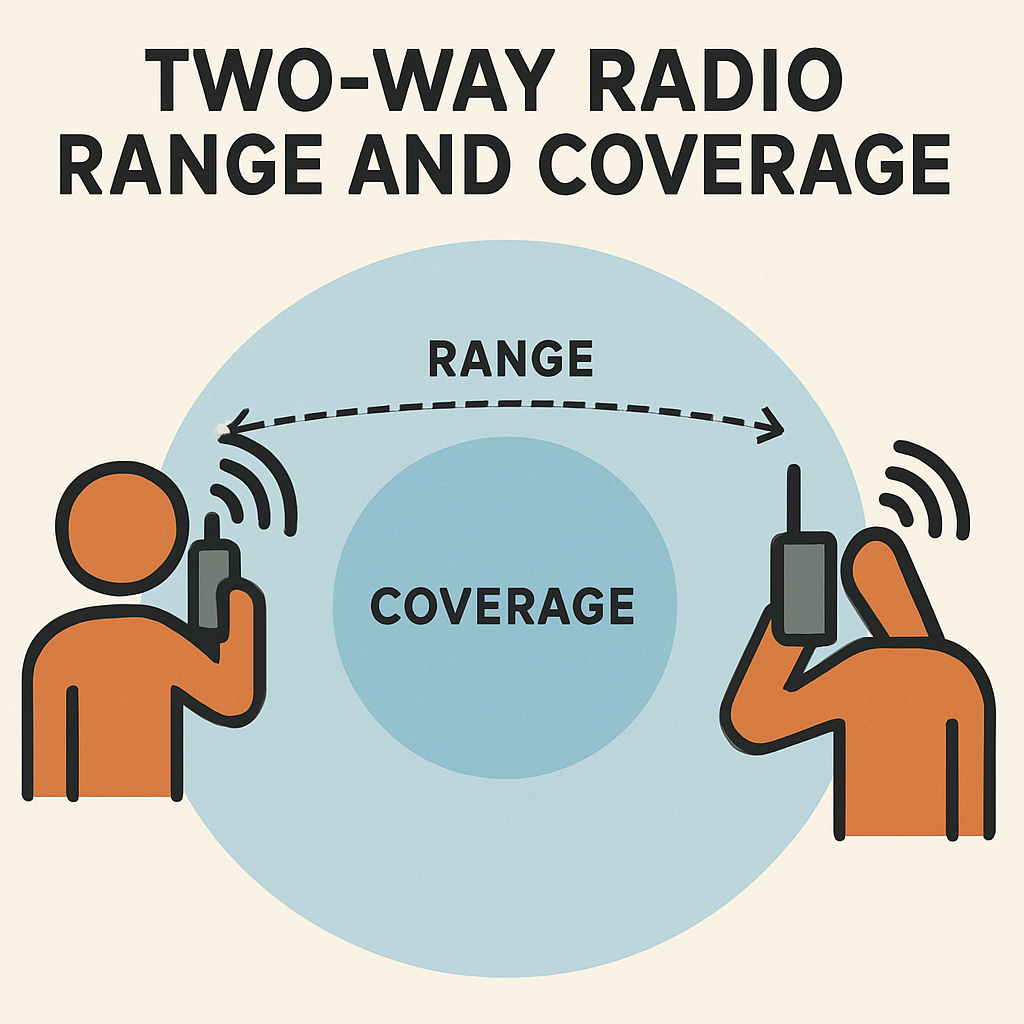
Even a smart network fails if the signal can’t penetrate concrete or hills. Since handheld radios are low-powered, solving radio dead zones in emergency response relies on repeaters. Acting like a relay runner standing on a mountaintop, a repeater catches the weak signal from an officer’s belt radio and immediately re-broadcasts it with massive power. This “catch and throw” process ensures a voice from a basement or valley reaches a dispatcher thirty miles away clearly.
These systems operate on specific two-way radio frequency bands for law enforcement, chosen based on whether the department covers a dense city or a sprawling rural county. Yet, having a strong, reliable signal is only half the battle. Now that the message can travel anywhere, the next challenge is ensuring that criminals with scanners can’t listen in.
Why You Can’t Tune In: The Reality of AES-256 Encryption
For decades, anyone with a cheap radio scanner could listen to local police dispatch from their living room. Today, tuning into those same channels often results in silence or garbled digital noise because agencies have adopted AES-256 bit encryption for secure communications. Unlike old analog radios that broadcast raw voice, modern systems treat speech like a secure bank transaction. The radio converts the officer’s voice into a complex mathematical code that only another radio holding the exact same digital “key” can unlock and turn back into sound.
This digital lock serves a critical purpose beyond just blocking hobbyists. Law enforcement agencies moved from open airwaves to encrypted streams for three specific reasons:
- Officer Safety: Stopping criminals from monitoring police locations during active pursuits.
- Victim Privacy: Protecting sensitive personal data, such as medical history or home addresses, from being broadcast publicly.
- Tactical Security: Allowing SWAT teams to coordinate surprise movements without tipping off suspects.
Consequently, the answer to “can civilians listen to encrypted police frequencies” is usually no, as cracking this military-grade security is virtually impossible for the average person. While preventing unauthorized signal interception keeps operations secure, it raises a new question: if these radios are basically secure computers, why don’t police just use smartphones?
The Future of the Lifeline: Why Reliable Voice Still Beats the Smartphone
You can now view that heavy device on a uniform not as a relic, but as a lifeline engineered for survival. While smartphones require dialing and waiting, the specialized “Push-to-Talk” mechanism offers instant connection when split seconds count. This rugged design ensures that even when disasters jam public cell towers, the officer’s call for backup cuts through the noise.
That reliability is secured by strict FCC licensing, which keeps emergency frequencies free from commercial interference. This creates a protected path for the dispatch console to manage hundreds of units without crossed signals. By reserving these invisible lanes for public safety, the system ensures a digital request for help never competes with civilian traffic.
The technology continues to advance with multi-band radios like the Harris XL-200P, which seamlessly bridge traditional radio waves and modern LTE networks. Yet, even as these hybrid systems emerge, the core principle remains unchanged. In the chaos of an emergency, the radio serves as the one tool trusted to work when everything else fails.
Contact us for to choose your right two way radio.