-
What Is Radio to Radio Communication? and How Does It Work?
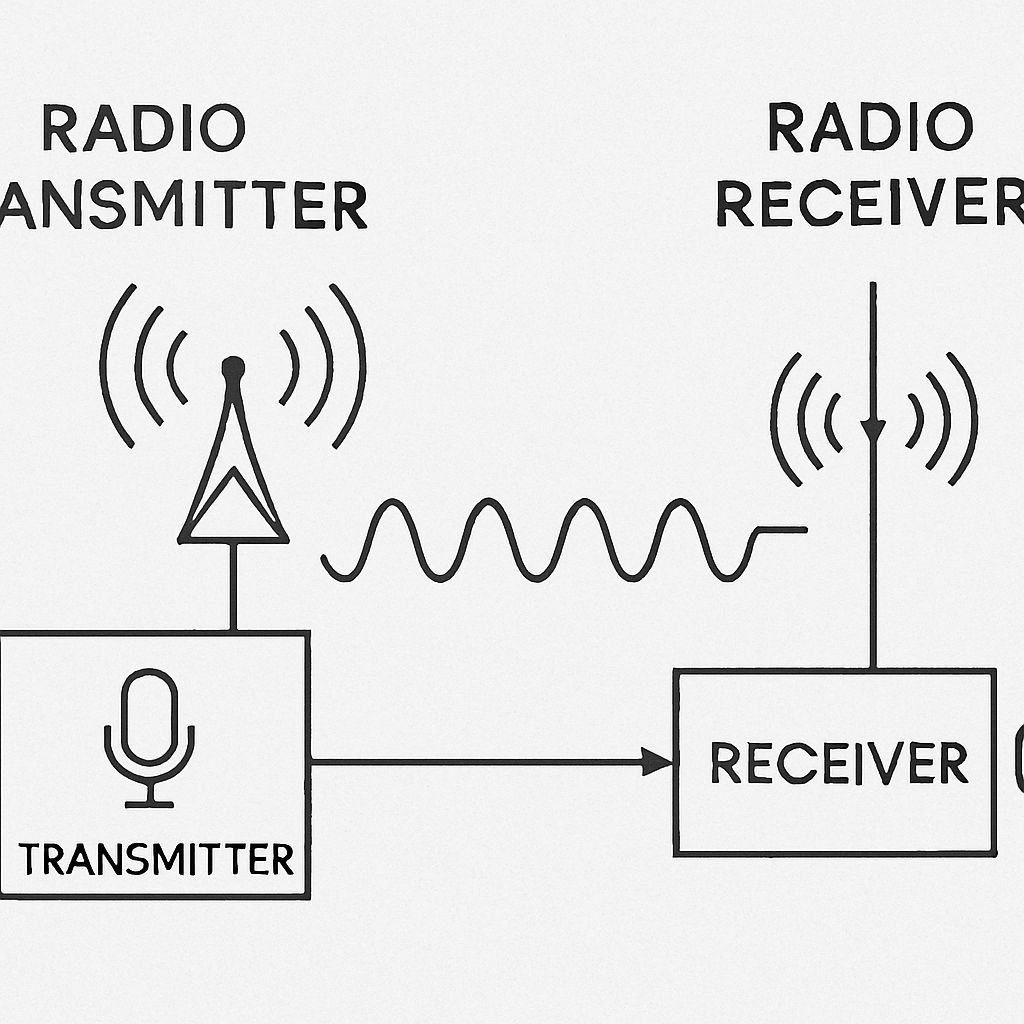
Radio communication is not just about sending and receiving messages; it’s about bridging gaps between individuals, communities, and even continents. It offers a unique blend of simplicity and sophistication, making it accessible to hobbyists and essential for professionals in various fields. Understanding how radio waves work and their applications can provide valuable insights into both the historical significance and future potential of radio technologies. At the heart of radio to radio communication are radio waves. These are a type of electromagnetic wave, similar to light waves but with much longer wavelengths. Radio waves can travel long distances, making them perfect for communication. They are capable of traversing through the atmosphere, bouncing off surfaces, and even penetrating certain materials, which is why they are so effective for both short-range and long-distance communication. Radio waves are not just vital for communication but also play a crucial role in various technologies, including radar, navigation, and even astronomy. By studying these waves, scientists can learn more about the universe, from understanding weather patterns to exploring outer space. The ability to manipulate and utilize radio waves has led to countless innovations and continues to be a field of active research and development. How Radio Waves Are Generated Radio waves are produced by a transmitter, which is an electronic device that uses an antenna to send out these waves. The transmitter modulates the radio waves to carry information, such as voice or data, over the air. This modulation process is essential as it allows the encoding of information onto the wave, whether it be a simple voice transmission or complex digital data. The generation of radio waves involves converting electrical signals into electromagnetic waves, a process that requires precise electronic components and engineering. Transmitters can vary greatly in size and power, from small handheld devices to massive broadcast stations. Each is designed to meet specific needs, whether it’s for personal communication, broadcasting to millions, or scientific measurement and research. The Role of Frequency Every radio wave has a specific frequency, measured in hertz (Hz). The frequency determines the wave’s position in the electromagnetic spectrum and influences how the wave behaves. Higher frequencies, for example, can carry more data but have a shorter range. This is why different frequencies are allocated for different purposes, such as AM/FM broadcasting, emergency services, or military communication. Frequency also affects how radio waves interact with the environment. For instance, lower frequencies can penetrate through obstacles and bend over the horizon, making them ideal for long-range communication. Meanwhile, higher frequencies may require a line of sight but can transmit more data, which is crucial for modern digital communication systems. Understanding frequency is key to optimizing radio communication for various applications. Components of Radio Communication To understand how radio communication works, let’s take a look at its key components: the transmitter, receiver, and antenna. Each of these components plays a critical role in the communication process, ensuring that the transmitted signal is accurately sent, received, and interpreted. Together, they form a system that can range from simple, handheld radios to complex networks of broadcasting stations. Understanding each part’s function helps in troubleshooting issues and improving communication efficiency. The Transmitter A transmitter is responsible for generating and sending out radio waves. It takes the audio or data signal and modulates it onto a radio wave. This modulation can be in various forms, such as amplitude modulation (AM) or frequency modulation (FM). The choice of modulation technique can affect the quality and range of the transmission, with each method having its strengths and weaknesses. Transmitters are designed to match the intended use, whether for personal communication, broadcasting, or specialized applications like aviation or maritime communication. Advances in technology have made transmitters more efficient, compact, and versatile, allowing for better quality transmission over larger distances. The development of digital transmitters has further enhanced the clarity and reliability of radio communication. The Receiver The receiver is the device that picks up the radio waves sent by the transmitter. It uses an antenna to capture the waves and a tuner to select the desired frequency. The receiver then demodulates the signal, turning it back into audio or data that can be understood. This process is crucial for ensuring that the information is accurately received without distortion or loss. Receivers have evolved significantly, from basic crystal radios to sophisticated digital receivers that can handle multiple signals simultaneously. Modern receivers often incorporate digital signal processing (DSP) to improve signal clarity and reduce interference. The ongoing development in receiver technology continues to enhance the capabilities and applications of radio communication. The Antenna The antenna plays a crucial role in both transmitting and receiving radio waves. It converts electrical signals into radio waves when transmitting and does the opposite when receiving. The design and size of an antenna can greatly affect the range and quality of communication. A well-designed antenna can enhance signal strength, reduce interference, and ensure clear communication over long distances.…