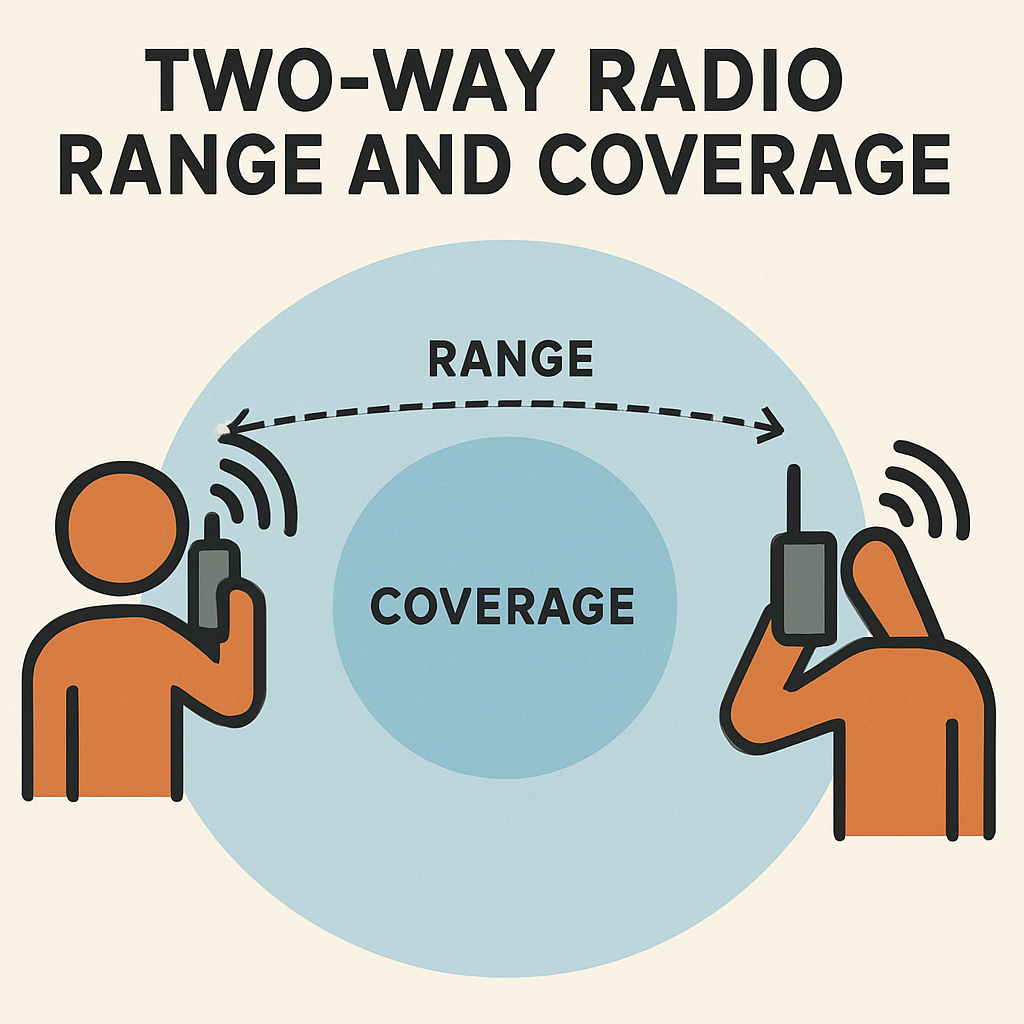
You’re miles into the backcountry when the “No Service” icon mocks you, cutting off your digital lifeline. In these inevitable dead zones, mobile radios become essential gear. Unlike a portable “walkie-talkie,” a mobile two-way radio is a powerful vehicle-mounted communication system fed directly by your car’s battery. Think of a smartphone signal as a whisper; these high-wattage units act like a megaphone, shouting your voice across distances that cellular towers simply cannot reach.
Shouting Over Mountains: How Wattage and Antennas Triple Your Range
Think of a handheld walkie-talkie like shouting with cupped hands, while a vehicle-mounted mobile radio acts like a high-powered broadcast. Portable units rely on small batteries to push 5 watts, but a mobile unit connects to your vehicle to deliver 50 watts. This high wattage output for long distance scenarios allows your signal to punch through weather and foliage that would silence a weaker device.
- Dense Forest: 5W Handheld (0.5 miles) vs. 50W Mobile (3–5 miles)
- Open Highway: 5W Handheld (2 miles) vs. 50W Mobile (15–25 miles)
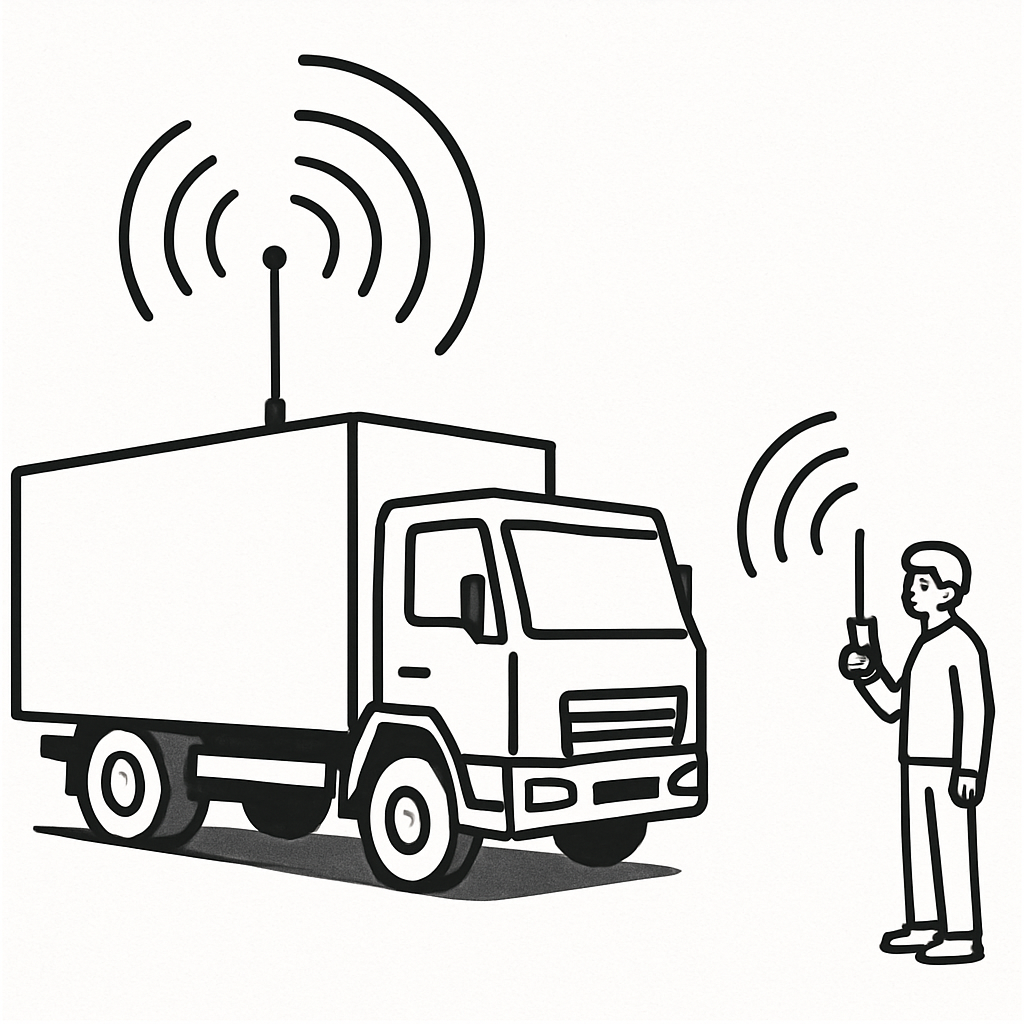
Raw power cannot always defeat geography, however. Since radio waves travel in straight lines, a mountain will still block your path. This is where repeater stations and signal range intersect to save the day. A repeater acts like a relay runner on a peak, catching your transmission and instantly rebroadcasting it down the other side. By utilizing a VHF mobile radio tuned to these stations, you can talk over obstacles that physically block your line of sight.
Choosing Your Lane: GMRS vs. CB for Off-Roading and Emergencies
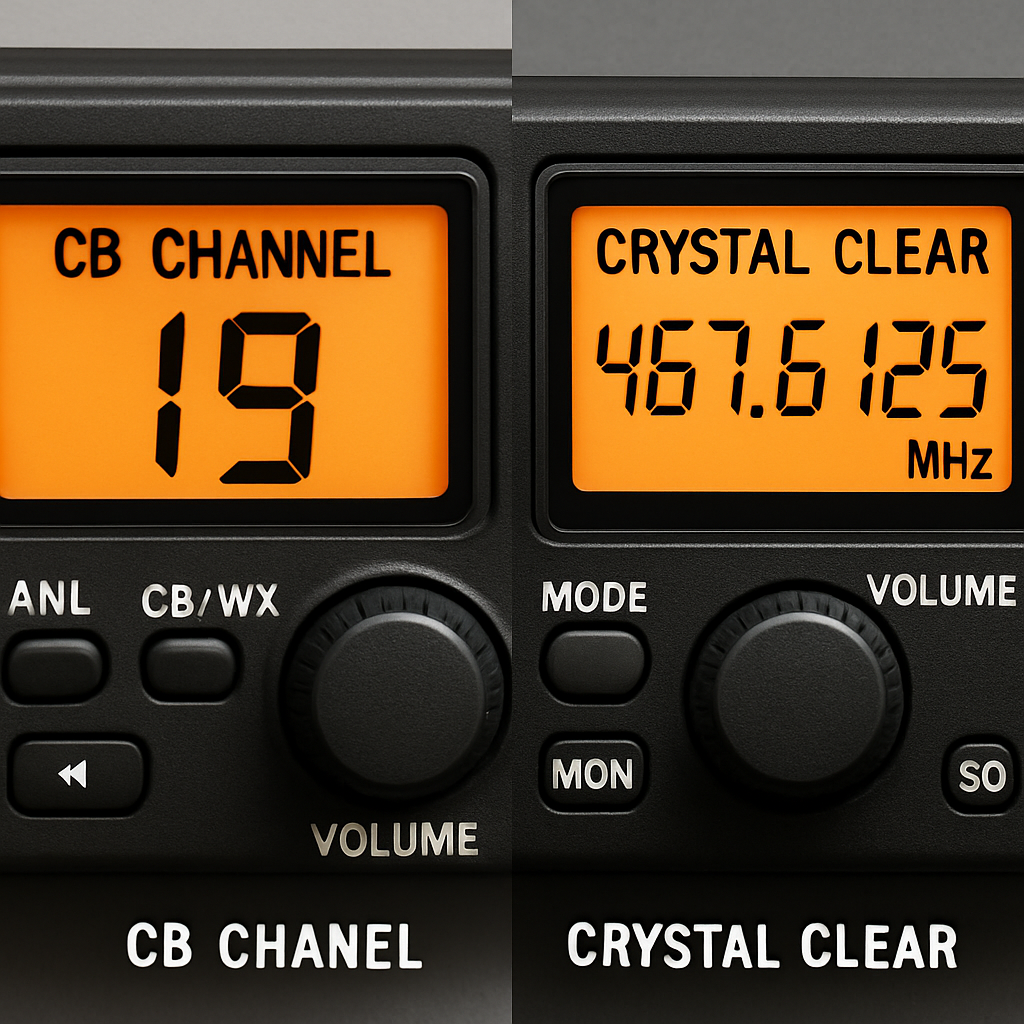
While raw power helps your signal travel, choosing the right service determines how clearly that signal arrives. The debate between GMRS vs CB radio for off-roading often comes down to audio quality versus popularity. Citizen Band (CB) is the classic standard found in most semi-trucks; it is universally compatible but uses AM signals, which are prone to heavy static and interference. In contrast, a modern GMRS mobile two-way radio utilizes FM transmission, offering “phone-call quality” clarity that is far superior for convoy coordination, though it cannot communicate with older CB units.
Stepping up to this modern standard requires navigating FCC licensing for land mobile bands, but the process is surprisingly straightforward. Unlike amateur “Ham” radio which demands technical exams, a GMRS license is purely administrative: you pay a fee (approx. $35) to cover your entire immediate family for ten years with no testing required. This small barrier to entry unlocks powerful hardware features like programmable frequency memory channels, allowing you to save complex repeater data into “Channel 1” or “Channel 2” slots for instant access during emergencies.
- Citizen Band (CB): No license required, lower power (4 watts), prone to static, universal compatibility.
- GMRS: Simple license (no test), high power (50 watts), FM clarity, requires compatible hardware.
Your 3-Step Plan for Reliable Off-Grid Connection
Now that you understand the hardware that eliminates dead zones, start by selecting a durable unit. Prioritizing waterproof and dustproof rugged transceivers ensures your lifeline survives the elements. Whether you consider professional options like a Motorola VHF mobile radio or versatile GMRS units, the goal is unwavering reliability when the pavement ends.
Finalize your setup by choosing the right external antenna mount to maximize your signal’s reach. Before your next adventure, run a quick pre-trip safety check to confirm your transmission is clear. The technical learning curve is behind you, and the resulting peace of mind is well worth the view.